Friday, February 23, 2007

Reading

There is nothing more likely to ruin a consistently solid run of reading than starting a book reviewing blog, but I've not stopped completely. At the moment I'm wrestling with ゲゲゲの鬼太郎 (Ge ge ge no Kitarou) and since it's in Japanese, I'm struggling.

First published in 1966, this series of manga by Shigeru Mizuki features pretty much the entire bestiary of traditional Japanese monsters, or 妖怪 (Youkai). The protaganist, Kitarou (meaning Ogre/Demon Boy) occassionaly acts as a go-between for the worlds of Humans and Monsters, helping out one when the other oversteps their bounds. What I've read so far is gleefully ghoulish. Take for example, Kitaro's father, Medama Oyaji (eyeball father) who lives in his son's empty eye socket, usually obscured by that rouge flap of hair.

At the moment, a young baseball player has happened across Kitarou's bat (lying about in a graveyard). The bat of course has magical powers, and the team are on their way to becoming professionals, when Kitarou turns up, wanting it back. The young player is reluctant to relinquish his tool to fame, so a challenge is declared, naturally, with a game of baseball...Kitarou's team mates are a variety of nasty creatures, and the human baseball players are appropriately terrified, as this game may cost them their souls...

...so that's what I'm doing now...

Labels: , , ,

Sunday, January 21, 2007

大寒 - Daikan

Literally "Big Cold", Daikan is the coldest part of the winter before spring, the period from the 20th of January until the 3rd of February, or Setsubun. Our saintly landlord came round last night with a large bowl of Japanese pumpkins. Apparently, if one eats pumpkins on the first night of Daikan, then catching a cold can be avoided all year round. Tune in at the same time next January, when the mettle of this tradition will be scrutinised.

Labels: , , , ,

Friday, January 05, 2007

Of unprecedented generosity and unremitting bastardry

Last night, Hayley and I went to a banquet at the house of our venerable landlord, Tsuchiya san. On the menu was Sukiyaki, basically high quality beef, thinly sliced & cooked at the table in a pan of soy sauce and sugar with a variety of vegetables and tofu. It was huge. He also presented a massive dish of sushi, about fifteen varieties, so the negligible journey home was accompanied by an invisible orchestra of timpani.

Our host wasn't eating much, spending most of the night cooking for us. We felt a little self conscious about that, but he didn't mind, and informed us that he had to keep below a certain weight, for the good of his health.

The Japanese Ministry of Health has approved an equation for determining your relative height to weight ratio. I, for example am roughly 186cm tall, and I weigh 80kg. For the equation, you need to put a decimal point after the 100 for your height, and multiply it by itself, thus

1.86 x 1.86 = 3.4596

Then divide your weight by the answer above.

80 ÷ 3.4596 = ?

If your answer is between 20 and 24, then you are, by official Government standards, healthy. Myself scoring 23.12406 means I could be healthier, but I've always known that. Hayley (despite her adoption of my uncompromisingly large diet) is remarkably within the gap.

Given that it's a rarity for the Japanese to entertain at home, this was something of an honour, so we bought desert, in the form of dango and cakes shaped like fish, stuffed with soy bean jam. These, however, were immediately offered up before his Shrine to Inari, the Shinto Rice Deity, and his family Buddhist Temple, adorned with pictures of his parents. Buddhism and Shinto are intimately linked in Japan.

Tsuchiya san went on to talk about the history of Japanese Buddhism and how there is no religious conflict within the country. True, Christians were persecuted in the Edo period, but that probably has more to do with social, political and cultural factors, rather than being an ideological disagreement.

Tsuchiya san is a member of the Soutou sect of Buddhism, although his family has been traditionally associated with a different sect. He is enthusiastic about Soutou Buddhism because he feels it is the root of Japanese culture.

I may be accused of oversimplification by any Buddhists who might be reading, but Soutou Buddhism works on the principal that Buddha nature is inherent in everybody and everything, and it doesn't need to be attained, just harmonised with. Simple rituals, such as the Tea Ceremony, or Zazen, are intended to realise this clearness of mind and spirit. Soutou Buddhism has rules for every aspect of life, from opening doors to going to the toilet.

For a people famed for avoiding the direct and embracing the general, at least when it comes to communication, the Japanese can be sickeningly specific. This is understandable when one considers their complicated religion and language, where a slight mis-pronunciation can result in wildly different meanings, but the condition takes a near pathological twist when it comes to matters bureaucratic. Today, I have returned from the local ward office, defeated in my attempts to avoid paying a bill I don't think I should.

Humph...entries like this make me want to resurrect the late Blog of Anger...basically, Health Insurance is mandatory out here. When I arrived, my illustrious employers provided me with an insurance plan they recommended. Unfortunately, when it came to an old injury flaring up again, this proved to be as useful as a chocolate teapot. In order to avoid paying the catastrophic fees I incurred for a bout of tonsillitis earlier last year, I had no choice but to sign up for the National Plan...and how glad I am that I did.

I've complained about this in another entry, that an injury in need of therapy was provided with painkillers, but now it seems that they want me to pay for a years worth of cover, namely the first year I arrived, when I was on that money-pit advised by the bastards I work for. Today has been a bitter test of my Japanese and basic tolerance of mankind.

That was a bit of a tangent wasn't it? Didn't go anywhere other than complaining either...I seem to have lost touch with my Buddha nature.

Labels: , , , , , , ,

Wednesday, December 20, 2006

Beards

No berd hadde he, ne nevere sholde have, As smothe it was as it were late y-shave; I trowe he were a gelding or a mare.
- Geoffrey Chaucer, The Canterbury Tales

There, Chaucer was describing the Pardoner, one of the Pilgrims to Canterbury. He refers to the characters' lack of facial hair, comparing him to either a horse that has been castrated, or a female.

Beards have commonly been seen as a sign of virility. Hercules is often depicted as bearded, whilst pretty much the whole Canon of Norse Gods sported vigorous efforts.

For Romans (variously adopting or rejecting the beard several times in their history), the bearded man was a model of virtue & simplicity, or he was a slave. In some periods, they wore beards in imitation of the Greeks; in others, to distinguish themselves, they didn't.

Clergymen in 16th century England were usually clean shaven to indicate their celibacy, or bearded in order to demonstrate their acceptance of Protestant Reforms. Sikhs regard the beard as sacred, as it is part of Gods' design of mankind. In a similar vein, St Clement of Alexandria, himself possessed of a fine specimen, had plenty to say on the subject of beards.

"How womanly it is for one who is a man to comb himself and shave himself with a razor, for the sake of fine effect, and to arrange his hair at the mirror, shave his cheeks, pluck hairs out of them, and smooth them!…For God wished women to be smooth and to rejoice in their locks alone growing spontaneously, as a horse in his mane. But He adorned man like the lions, with a beard, and endowed him as an attribute of manhood, with a hairy chest--a sign of strength and rule."

"This, then, is the mark of the man, the beard. By this, he is seen to be a man. It is older than Eve. It is the token of the superior nature….It is therefore unholy to desecrate the symbol of manhood, hairiness.”


Bearded men are also frequently cast as sages, a pantheon of fictional wizards cementing the image of the mystical old man. This element of mystery can cast suspicion or doubt over the bearded man,

Ned: What's wrong with my moustache?
Homer: Makes it look like you got something to hide.

Dialogues III, 8F16

and it's important to consider the horrors of the beard of Mr Twit, said to contain sardines, stilton cheese and cornflakes, which he would eat later at his leisure.

Before going to war against the Persians, Alexander the Great commanded his army to shave,

"...for there is not a better handle to take a man by than the beard."

Whether this proves to be my downfall at school or not is another matter.

Labels: , ,

Wednesday, November 22, 2006

In defence of English Cooking...the birth of a paradigm

I'm standing on the shoulders of a giant here, but it needs to be said.

At school today (a new one) I got chatting to the Kyoto Sensei (Vice Principal) about a variety of things, for example, whether or not England uses the Euro. He was surprised to learn that she doesn't, and I can understand that gap of knowledge - manners monetary bypass me deftly.

Something that has come to my attention frequently however, is how revolting English food is perceived to be. He approached me conspiratorially,

"Chris, I've heard that English food really isn't nice at all..."

I then went on to describe the joy of Shepherds Pie and the necessity of a gas oven.

The list is interminable. Who can beat a full English Breakfast? Yorkshire Puddings sailing across a sea of gravy to a continent of beef? Cheese & Pickle?

Japanese isn't a cuisine which uses herbs - maybe a shiso leaf underneath a piece of raw squid, but the emphasis is on the purity and freshness of ingredients. There, the cannon is loaded for a common volley. The perception of English food, much like one I've heard about curry, is that condiments and flavourings are used to disguise the taste of food, which in its basic form is unpalatable. English folk (vegetarians aside) know as well as I do, that a nice bit of chicken is only made nicer by a bit of Rosemary.

Boiled meat has noses turned up from all across the world, but I'm not sure that the Kyoto Senseis' opinion of English cooking stems from that, as Shabu Shabu, one of the pricier dishes over here, is high quality meat boiled in a tofu & seaweed stock.

Invariably, when two cultures meet, differences are talked over, and food is an obvious choice. I've yet to meet a Japanese person who isn't deeply suspicious of English food, despite being unable to name a dish apart from Fish and Chips.

Once an idea begins to put down roots, it's difficult to prune it without access to the right information. Rumours about the low quality of raw ingredients, requiring a list of condiments that themselves may be off-putting to the uninitiated (brown sauce?!) coupled with minimal opportunity to provide the accused with a fair trial, results in the poor image English cooking receives.

Then characters like Jacques Chirac denounce English cooking as second worst in Europe after Finnish. Proving, indubitably, that whatever our problems internationally, it's all the fault of the French.

Labels: , , , ,

Sunday, November 05, 2006

BANG!

In 1605, a group of Catholic conspirators tried to blow up the Houses of Parliament, hoping to also take out the Protestant King James I (who brought you the standard issue Bible of English Christians). They failed, and the man responsible for actually setting off the explosives, one Guido or Guy Fakes, was apprehended and tortured into revealing the names of his co-conspirators. Our narrow escape from a descent into anarchy is celebrated on November 5th, the day the plot was foiled.

Given the behaviour of our current Government, it's tempting to ask why we celebrate the death of a man who tried to blow up Parliament...but in all probability, had the Gunpowder Plot succeeded, we'd be living under a Catholic Government rather than a Protestant one.

As with most Western festivals, it has its roots in Pagan traditions; specifically the Celtic Samhain (pronounced "sow-in"), from which Halloween also comes. Sacrifices were made to a variety of deities at the start of the winter - a time associated with death and hardship for the ancient Britons.

Bereft of organised bonfires on this auspicious night, Hayley, myself and two blokes called Andy indulged our barbaric Anglo Saxon instincts of fire worship and lager drinking. Photos courtesy of Hayley.


Labels: , ,

Friday, November 03, 2006

Culture Day

Just what we need - a three day weekend. This of course doesn't apply to everybody in Japan - take the tireless teachers of the terrible tykes who will the Tennos' of tomorrow. As I staggered outdoors for the first time today, I was greeted by an onrush of my students, jogging dutifully around the school. I however, had only been out of my pyjamas for fifteen minutes.

November the third was originally the birdate of the Emperor Meiji. It also commemorates the adoption of the post WWII constitution. Schools across Japan have been preparing for the event with Culture Festivals and the like...these have the school presenting all the meats of their cultural stew, such as drama, art caligraphy, music and foreign language ability. This last aspect usually involves resident Gaijin Assistants presiding over a competition of English Presentations...and it's sometimes fun, especially when one sees the schools who work out that the way to win these things is to entertain the judges.

My favourite school in the whole of Kawasaki (alas, one that I have lost) presented an English version of an old Japanese folk tale...

An old man accidentaly drops a rice ball down a mouse hole...he then hears celebrating mice, and drops another one...the excitement down below mounts, and the kind old man gives them the last of his lunch. The grateful mice give the old man a box, and tell him to take it home. This he does, and he and his wife open it up, only to discover a large amount of gold. Popular in tales involving a kind old man is the mans neighbour being mean and spiteful. Upon discovering what has happened to the nice old man, this sour character decides to see if he can get a similar result...naturally with dire consequences.

What I really enjoyed about this presentation was that every time the old man dropped some food, a student would appear from behind the wings with a cardboard cut-out rice ball mounted on his arm like a shield. He would then adopt a Mighty Morphin' Power Rangers stance, bellow "Rice Ball Number 1, GO!!' and do a series of somersaults towards the prop representing the mouse hole.

Also of note was a retelling of Urashima Taro, which interestingly enough contains that old story germ about time in "faery-land" running at a different pace from the Earth. In this updated version, when Urashima Taro returns home, he is of course in smelly, noisy and utterly bewildering 21st Century Japan.

More plays would have been fantastic. Unfortunately, there is a tendency in events like this to be presented with monologues. Some of the issues these kids battle their way through are undoubtedly important. The problems come when such speeches are translated directly...

When listing things, such as the contents of a bag, the Japanese would say enpitsu ya megane ya seifu nado, the ya almost acting like commas and the nado meaning "...and so on". Unfortunately, this applies to all lists, and when translated into English, something is lost by this linguistic quirk. The earnest outpourings of these bright-eyed teenagers seem lacking in sincerity when they appeal us to consider the horrors of "...famine, poverty, war and so on."

Labels: , , , , , ,

Sunday, October 15, 2006

Sex...

In (eventual) response to a request from Dave, here's the first of a trilogy about the racier side of Japanese life...no prizes for guessing the titles of the next two entries...

In such a rigidly conservative society as Japan, you'd expect an appropriate stance towards sex, but this isn't always the case. Japan actually displays attitudes that seem to contradict each other; on one hand, no kissing in public because of sexual connotations, on the other, a troupe of transvestites carrying a gigantic pink cock down a main road. Surprisingly enough, in the dictatorship of the Edo period, attitudes to sexuality were considerably more lenient than they became with the introduction of "Western Enlightenment" in the Meiji period. The new rulers felt that public morality had to be tailored to strengthen ties with Western powers.

During the hoo-ha over Brokeback Mountain, I remember one particularly virulent critic saying they found it highly offensive that cowboys, truly a Great American Symbol were presented as gay men, and that the Japanese probably wouldn’t like it if there was a major film made about a gay Samurai…well, the thing is…what do the Japanese and the Ancient Greeks have in common? Medieval Japan (and to some extent, modern Japan) was a rather misogynistic, men-first society. Women were there for sex and making babies. There were those who felt that ones true equal, intellectually and emotionally could only be found in one of the same sex - women simply weren’t made of the same stuff that men were, consequently couldn’t relate to their deeper feelings. Therefore, it wasn't uncommon for some Samurai to have page boys as lovers.

Today, as in the past, most Japanese live with several generations of their family, in a house with paper thin walls. Even those who live alone aren't assured privacy from their neighbours. This is where the uniquely Japanese phenomenon of the Love Hotel comes in handy. These are establishments, usually located away from the activity of a city, where couples can have sex in private surroundings, staying for just a few hours, or overnight. The facades are usually ornate in an ex-Mafioso Riviera Mansion style, whilst the entrances are discreet. Then there's the rooms themselves, legendarily displaying a wide range of decoration, from Medieval Palace to '50's Diner (complete with a bed shaped like a car), with some places incorporating an S&M room in the basement. These days, Love Hotels are trying to lose their sleazy image, so many of the Disneyland style theme rooms are disappearing, in favour of less cartoonish (but not necessarily more tasteful) apparel.

As mentioned before, you will almost never see Japanese couples exchanging a kiss in public. This is because in Japan a kiss is seen as a part of foreplay. Hayley and I once ran into a gaggle of some of my 3rd year girls. In the midst of their giggles, they asked us to kiss each other. Naturally, we didn’t humour the little voyeurs. There was actually a law against kissing in public in the 1920's, rescinded during the American occupation in 1945. The Japanese word for kiss, seppun, is rarely used, the English derived kissu being a substitute. According to one writer (very interesting article if you have the time),

"many Japanese consider kissing to be an import from the West..."

This same writer recounts a story of Rodins' sculpture "The Kiss" being exhibited in Tokyo in 1930. The nudity of the figures wasn't considered problematic by the authorities, but they insisted that the heads be covered up. This is echoed in the attitude towards pornography, which has its traditions in the erotic Shunga prints of the Edo period.

The legality of pornography in Japan is a peculiar old fruit. Whilst titles of a violent or scatological nature don't seem to be a problem, genitals and pubic hair on the other hand are an absolute no-no. Toshio Maeda's "Urotsukidoji" series of Manga (not for the faint hearted) got around this problem by presenting the penis as a tentacle appendage attached to a big scary monster.

Pornography is widely available, sometimes on display in the most ill advised places. One video store in Kawasaki happens to have their adult section right next to a shelf of cartoons, and there's even a porn-dispensing vending machine in central Osaka.

Worryingly famous are those who decide to take advantage of the anonymity of crowded trains and have a cheeky squeeze of tender parts of someone’s anatomy. Thankfully, train companies have considered this matter, and added “women-only” carriages to trains at certain times, when they consider the chikan to be out in force…plus, read any internet message board about Japan, look for this subject and read with glee the stories of ladies who take their revenge on the filthy gits.

All this seems to paint the Japanese as a nation of sexual deviants, but that's only because the data has been clumped together in a sweaty writhing mass. The fabled vending machines of school-girls panties caused a moral uproar when they first appeared in Chiba in the '90s. The public was horrified on the whole, but legally, the authorities couldn't do anything about it, as there were no laws in place covering the sale of used underwear. Suddenly, an idea was born. The garments were brought under the control of a law governing the sale of antiques, and declared as such, since they were second hand. Anybody wishing to sell antiques had to apply for a licence from the local governing body, which could naturally be refused during the process, as it was in most cases. I never thought I'd type this ever, but...bureaucracy saves the day!!

Labels: , , , ,

Sunday, September 24, 2006

Anybody still there?

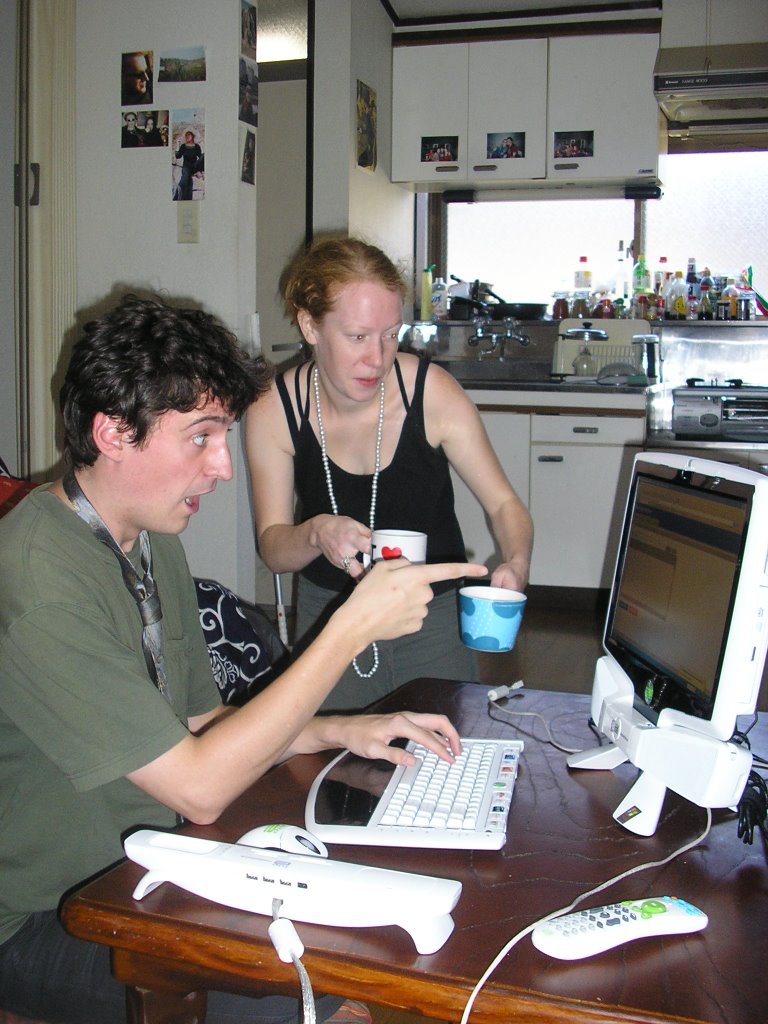
A World Cup ago, a truly inspired act of clusterfuckery resulted in the death of my faithful laptop, hence the inactivity here in recent months. The unprecedented generosity of my mother has bestowed upon us a shiny new beastie, which permits us, from the comfort of our home, to keep in more frequent touch with friends & family, refresh web & photoblogs on a regular basis, remain savvy with regards to the planet but most importantly, resume watching this.

This sudden acquisition of a new computer took us both by surprise - thusly this weeks entry has about as much substance as what we did this weekend...tremendous fun, friday night was...a thirty-eighth birthday party in the heart of Tokyo, held in a popular bar, which sells 200 yen beers, although "beer" is a very generous description of what we were drinking that night.

Verily, 'twas a night of random encounters, perhaps the most entertaining being these two funny German fellas...

...and a gaggle of London girls, as it's always refreshing to hear an English accent this far away from home...that particular thirst was sated in a very surprising way whilst I was waiting for Hayley outside the station.

The Hachiko exit of Shibuya station is named after a certain dog, whose story echoes that of Edinburgh’s Greyfriars Bobby. The difference here is that the statue of Hachiko was erected before the death of the actual dog. Cynics have pointed out that maybe Hachiko didn’t visit Shibuya in order to wait for his departed master, rather to accept food from the people who had started recognizing him…but no matter…it’s a popular and convenient place to meet somebody in the madness of Shibuya.

Whilst I waited, I noticed a couple of Christians (specifically, Baptists, as I later discovered) wandering through the crowds, talking to people and trying to persuade them to come to church. Knowing what my answer would be, I tried to look inconspicuous, but non-Japanese tend to stand out over here. Naturally, I was spotted, and approached by a gentleman who, (well, I’ll go t’t’foot of our stairs) turned out to be from my hometown, sporting the delightfully Boltonian name of Roland. I found out later that his mother was Italian, his surname is “Franz” and that he’d been in Japan for about as long as I’ve been alive. I resisted the urge to point out that, in a sense, he represented the Axis powers of WWII, and did my best to avoid the subject of Theology. As far as people go, I liked Roland, and in a place like Tokyo, it was good to feel the “Bolton Kinship”, despite our wildly differing world-views. The crunch came when he tried to fulfill his mission and get me to Church, which was when I had to put my foot down and point out, without going into detail, the distance between our opinions.

Certainly, if I were to go to a Christian Meeting, I wouldn’t be able to do much, other than argue against their beliefs with the perseverance of a demolition worker, which I don’t really have the right to do…I think I surprised him with my refusal - although his face didn’t move a muscle, and he still kept his smile, there was the sensation of a sudden jolt, as if a pleasantly cruising vehicle in his head had just struck a solid object.

I wish him luck - although there are Japanese Christians, Shinto had deep roots long before Buddhism came over a century and a half ago…

Labels: , , , , ,

Wednesday, September 13, 2006

Bonodori


Bonodori
Originally uploaded by Shining Love Pig.

Definately a highlight for me - this dancing festival marks the beginning and the end of the Obon holiday...apparently it only lasts a week, and I suspect that different Japanese people celebrate it a different times of the year...one of my next door neighbours introduced it to me in July...maybe she comes from another prefecture...

Anyway, Obon welcomes the spirits of ones ancestors into the family home. Depictions of horses made from aubergines & cucumbers are left outside the doors, facing towards the home at the start, and away when the period is over. The spirits are suuposed to ride in and out on the animals.

This particular Bonodori was held in Roppongi Hills - a complex of buildings that wouldn`t look out of place in Logans Run, containing expensive cafes, cinemas, shopping malls et al...more noteworthy, it houses the Mori Art Museum and the headquarters of Asahi TV, which filmed the proceedings, so naturally it was hosted by a few celebrities and an old woman who was there as a crowd-exciter...I loved her because she looked like Jimmy Cranky...

...and yes, of course I danced. Photos exist, but to see those, you`ll have to pester Dave at No Compassion Without Suffering in the blogs menu...

Labels: , , , , , ,

Sunday, July 16, 2006

I wish I`d brought my camera.

Roppongi is an area of Tokyo, famous for being the place to go if you fancy an international romantic interlude. A recent acquaintance suggested that we go out for a lads night...this coupled with his conspiratorial "don`t tell your girlfriend" and description of himself as a "dirty old man" made me think that his intentions were less than gentlemanly, and my panic that he was going to try and take me to a hostess bar led me to call on a friend for backup, but this proved to be totally unfounded, and the night a good deal tamer than what I had expected.

The most notable venue was Gaspanic, a nightmarish flashback if ever I had one. Painted red, with a sweaty R&B soundtrack (which turned out to be the flavour of the evening), strutting hip-hoppers, randy army types, forty-somethings who looked like they should really know better, and the immortal sight of a line of blonde female patrons, dancing, nay, gyrating on the bar, wearing glittery hats, and clutching bottles of some girly non-beer drink...

...the bottle clutching was all important, and various signs in the establishment revealed it`s character - the strange one that declared "No tap water", and a lengthy one that stated the necessity of having a drink in ones hand...

"patrons seen without a drink in their hand will be asked to leave"

I managed three...having a beer in your hand in a place where conversation is nigh-on impossible makes you feel the need to do something, rather than observing the pulling prowess of your fellow patrons.


In a slightly more tasteful incident of Japanese life, today is the last day of Obon. One of our next door neighbours, a delightful old lady who can`t speak a lick of English, tried to explain it to me when I got home from school...she was sitting outside her front door with a dish of burning wood. She seemed to be saying something about bringing something into the house, and made a reference to Setsubun, so I thought it wa just a changing of the seasons thing...to be honest, I had other things on my mind, namely protecting the futon (left out to air that very day) from the threatened bout of 大雨 (Ouame - lit. big rain) announced on the school tannoy...I found out more later from a lovely group of ladies who pay me to practice their english conversation...

Obon is a period similar to Halloween, but with positive overtones. During Obon, lanterns are lit outside of homes in order to guide the spirits of ones dead ancestors to the family. Toy horses are made out of aubergines and cucumbers and left outside the front door. The idea is that the ancestors ride to the house on the vegetable animal. On the first day of Obon, the animals face the door, to signify arriving, whilst at the end, they face away, signifying the ancestors returning to from wherever they came.

...actually, a straight changing of the seasons wouldn`t go amiss right now - have I mentioned how obscenely bloody hot it is? Even though now, I`m in air conditioner paradise in this lovely internet cafe, when I step out, it will be a very different story...and the flat`s full of cockroaches...ugh...

Labels: , , , , , ,

Sunday, July 09, 2006

Nationalism and the talking umbrella

Wasuerki san has been rather quiet of late. Of course, now Hayley`s gone back to England for her sisters wedding (congratulations Laura & Mark), the bakegasa has re-affirmed its prescence like a bitterly jilted john. This week, it`s been all I can do to get away from the thing. When I`ve spent the day at elementary schools, chasing kids with as much energy as I have biomass, the last thing I want to do is talk about history with "someone" who can only get offended by my opinions.

Take for example all this broohaha over the PM Koizumi visiting Yasukuni, wherein are enshrined Japanese soldiers of WWII, including several convicted of war crimes. Repeated criticisms from nations considering themselves victimised by Japans` actions in the war has not stopped Koizumi from making a visit each year. He has responded by saying that he`s doing it as Junichiro Koizumi, rather than as the Prime Minister of Japan. Protestations from other Asian countries aren`t being dealt with on a diplomatic level.

I personally think that a politician can`t keep his personal and private life separate (Bill Clinton might have got off much lighter in tht case), especially when making such a controversial move as that.

Wasureki san on the other hand is incensed that one should even criticise Koizumi over this affair. It argues that other countries honour their war dead, and that Japan is no worse, in regards to war crimes, than any other nation. Oft overlooked when denouncing the evils of Nazi Germany is the fact that Britain invented the modern concentration camp during the second Boer War.

The bakegasa is also keen to point out the post WWII Constitution of Japan, effectively written by General Douglas MacArthur after the nations` defeat. Article 9 specifically demands that Japan surrenders the right to a military, except for self defence purposes. A unit of the SDF is currently in Iraq under the protection of Coalition forces.

Wasureki san argues that article 9 cripples Japan, renders them impotent internationally, and that the American military prescence makes the country nothing more than a gigantic aircraft carrier. Japan is limited when it comes to forming a foreign policy independant of the United States. The right wing Revisionist Party seeks to strike article 9 from the constitution, or maybe even re-write the whole thing. If Wasureki san had arms, I`m sure it would vote.

A recent issue in Asia is that of the approval of certain text books for use in Japanese schools, that gloss over or omit the atrocities committed by the military before and during WWII. The umbrella & other voices from the right believe that the current perception of Japans` conduct has created a culture of shame which erodes the spirit of the nation, and consequently, the ideals held dear. I will not play devils advocate over this issue. No country should forget their history, no matter how shameful.

But the broader issue isn`t quite so simple. Isolated for so many years from a rapidly changing world, Japan has had a unique history. The indigenous culture fomented in private for over two-hundred years before modernity came a`knocking in the form of Commodore Perry and his Black Ships.

Previously, only limited trade with the Portuguese and Dutch had been allowed. In all other respects, Japan was a closed country. It seems that Perry was charged with making Japan and offer she couldn`t refuse. Certainly, much of his diplomacy took the form of veiled threats, as he suggested that the next industrial nation to arrive on their doorstep with a battleship might not be as friendly as the US. This indirect directness more than likely struck a chord, and thus was Japan unwillingly introduced to the world.

Wasureki san was still part of a tree at that point, but I can detect a certain resentment. What really resonates is the post WWII occupation. Even today, Japan is proud of a culture which, despite external influences, is uniquely hers. For many, the defeat of a fiercely nationalistic stance and the Emperors subsequent renunciation of Divinity probably came as quite a blow. Having the constitution re-written by an occupying power can`t have made them feel any better. Maybe part of me can understand the animosity received by Gaijin from some of the elderly.

The bakegasa argues that recent issues like Koizumis visits to Yaukuni, the inclusion of the aforementioned textbooks and the re-adoption of the National Anthem & flag as state symbols are merely assertions of Japanese confidence, and that as far as war crimes and nationalism go, Japan is no worse than any other country. I think it`s important to remember that she`s no better either.

Labels: , , , , , ,

Sunday, June 11, 2006

The bakegasa speaks

I'm really quite embarrassed that my umbrella has achieved a command of English in considerably less time than it's taken me to learn pidgin Japanese. My attempts to speak in its native tongue are met with scorn to say the least. Accusations of crimes against the Japanese language are the most diplomatic of responses I've received. Having a kancho performed upon my posterior by a hopping umbrella is the least.

It's chosen a name for itself; Wasureki, or lost/forgotten tree. The name implies a sense of regret or melancholy, not evident in conversation, except for the odd moment of dewy-eyed patriotism. Wasureki san is well assured of its pedigree, insisting that part of the tree it came from was made into the hilt of the katana that Mishima Yukio used to commit seppuku. Like most Japanese, it has a very clear awareness of its roots.

As I said last week, objects become tsukumogami after they've existed for one hundred years. The interesting thing about Wasureki san is that it appears to have been self-aware for quite some time, even before it "came to life". When I think of the wealth of experience this umbrella has, I realise that I'm on to something amazing. It's seen four Emperors, two world wars, economic depression, boom and bust, the industrialisation of Japan, Hiroshima & Nagasaki, the Great Kanto Earthquake...20th century Japan on a stick you might say...but not directly to Wasureki san.

The precedence of seniority being what it is over here, I have to show the utmost respect to this former umbrella. This, coupled with my sketchy knowledge of Japanese history has resulted in several informal lectures on it's part. I can do little but sit and listen, which galls me sometimes, as I can detect a certain bias in its ululating.

Cultural, linguistic and generational factors aside (and disregarding the odd rectal intrusion), we get along fine. My interest in Japanese culture stands in my favour, but debating issues could be problematic.

Incidentally, I've received a few private emails that call the authenticity of last weeks photograph into question. With reference to other crypto-zoological images, I'd like to point out that an inferior photograph doesn't necessarily disprove the existence of these entities. Patrick Harpur, for example, postulates that the ambiguous nature of such creatures is reflected in their physical attributes; that they are neither corporeal nor ethereal, hence, are buggers to photograph. I've sent the picture to Fortean Times...time will tell...

Labels: , , , , ,

Sunday, June 04, 2006

How my umbrella made me late.

Punctuality is extremely important over here, and in all my years of dodging PE or oversleeping, I`ve never had such an improbable excuse as this.

Until recently, Japan has resembled a generous English summer. Now an early rainy season is gradually making its presence known. Last Friday, my semi-regular trudge to the school furthest from home was announced with a clap of thunder, and clouds that in a cartoon would have grumpy expressions, so I armed myself with one of the umbrellas we`ve inherited (this one being a gift from Kitsune sensei, a social studies teacher who`s now gone to another school).

As I picked it up, I noticed that the handle now looked like a foot, complete with toes that wiggled mischievously. The umbrella curved upwards, there was a rustle and a huge eye opened in the fabric, followed by a smile shaped orifice directly below, from which lolled a thick pink tongue.
“BLEARGH!!!” said my umbrella. Naturally, I screamed like a girl and fell over backwards, letting go of the thing. It hopped up and down on my chest, babbling in Japanese that I couldn`t keep up with.

I`ve often thought that the true test of ones language skills is against small children and drunk old men. I now count umbrellas amongst these challenges.

It got off me and bounced around the room, clearly excited, but I didn`t have time to indulge it (cloudy skies usually make me oversleep) and Hayley had already gone to work. I attribute my quick thinking to the phenomenon that makes grannies wrestle crocodiles. In my pre-stove existence, I lived on take-out bento, the net result being the acquisition of a small fortune in elastic bands. Grabbing the umbrella in one hand, I bound it securely with the other and hurriedly stuffed it into the shoe cupboard. I left home in a rush, thanking River Island for selling me a coat with a hood.

I made particularly grovelling apologies to the Vice Principal when I got to work. Hopefully she won`t tell my illustrious employers.
As you can imagine, thinking of grammar activities throughout the day was difficult because my head was full of umbrellas. I was sure I`d seen something like that before. Then I remembered a stall in Kyoto selling representations of what I`d seen.

I also remembered, from the reading I did for the Halloween entry, that the Japanese word for ghost (obake) means “changing thing”. Since a ghost is something that has changed from a living into a dead thing, and considering that the animistic spirit of Shinto sees life in all things, it started to make a bit of sense.

I googled (funny how that`s become a verb) bakegasa (ghost umbrella) and discovered that it`s a “species” of tsukumogami (artifact spirit). When objects reach their one-hundredth birthday, they come to life. It`s said that such creatures are repelled by electricity, so modern objects don`t become tsukumogami. All reasonably clear so far, but it doesn`t explain why Kitsune sensei randomly gave me an antique umbrella.

I was a little nervous on the way back home. When I arrived, I was greeted with an open shoe cupboard and the remnants of my rubber band collection. The bakegasa was sitting on the sofa, next to a Japanese/English dictionary and reading one of my grammar books, turning the pages with its tongue.
In broken Japanese, I apologized for my conduct that morning and bowed lower than I`ve done to any Koucho sensei. The umbrella responded with
“Nidoto surunai!” (roughly, "Don`t ever do that again.")

And yes, of course I`m the only person who can see it. When Hayley got home, it decided to turn back into a normal umbrella, leaving me to explain why it was on the sofa surrounded by textbooks. I don`t think she believes me. Rest assured, updates on this situation will be posted as they occur.

Labels: , , , ,

Sunday, May 28, 2006

The Japanese and Ecology - a contradictory tale of mind-bending lunacy.

The cultural and historical wealth of Kyoto spared it during WWII, not just from firebombing, but also from a nuclear attack. With such a background of preservation, it's fitting that the treaty which bears the city's name should have been negotiated there. Of course, the existence of the Kyoto Protocol doesn't represent an immediate change in behaviour in the country of its birth, but there is an awareness, albeit one with a slight limp.

In an effort to keep up with the rest of the world, during the Meiji period, Japan industrialised with alarming rapidity. Today, although it's roughly the same size as the UK, Japan produces more carbon emissions per capita than Britain, however things are apparently much better in Kawasaki now then they were in the '70's, when acid rain was a frequent problem. Walking by the heavily industrial docks in the bay, one can imagine what it must have been like before environmental issues were taken seriously.

Waste disposable in Japan is a pernickety, but necessary affair, requiring one to separate combustible from non-combustible waste. All well & good, but the amount of unnecessary non-combustible waste produced is staggering. I'm inspired to write this because a bottle of ketchup I bought came in a plastic pouch, and this isn't an isolated incident. Many products you buy in Japan come with layer upon layer of plastic wrapping. You will automatically be given a plastic bag for the smallest item you buy, regardless of how many others you might be carrying.

For a country with little in the way of natural resources, the consumption is huge. Once was enough, but the amount of times I've walked past a stationary car with the engine running and a man asleep at the wheel has me fuming. My first trip to Shinjuku had me agog at the thought of how much electricity the place must use in one night, but that pales into comparison next to waribashi, or disposable chopsticks.

Every year, Japan uses some 25 billion pairs of waribashi. Originally they were manufactured by Japanese companies until the '80's, when a joint Japan-China venture managed to produce them at a lower cost. Today, 97% of waribashi come from China. Recently however, China has imposed a 5% tax on chopsticks in an effort to curb de-forestation. If that wasn't enough, chopstick exporters have responded to that move by placing a 30% increase on their prices, a planned additional 20% currently pending. China is even making noises about completely stopping waribashi exports as early as 2008.

Ichiro Fukuoka, director of Japan Chopsticks Import Association, has said
"We're not in an emergency situation yet, but there has been some impact."
Alternative sources are being looked at, such as bamboo (which grows vigorously) or other suppliers of wood such as Vietnam, Indonesia and Russia. The obvious solution, to me at any rate, is to dismiss disposable chopsticks altogether, buy enough re-useable pairs for the amount of customers an establishment expects of an evening and wash the buggers.

Mayumi Ito, a spokeswoman for Seven & I Holdings Co., owner of 7-Eleven convenience stores has commented that
"We provide chopsticks only to customers who ask for them." I would like to categorically state that that is utter codswallop.

Due to the uncompromising Japanese climate, with periods of intense humidity, it was common for temples to be completely re-built every year, as the original structures would gradually decay. Naturally, this practice is rare in today's environmentally conscious age, although the Grand Ise Shrine in Mie prefecture still enjoys this makeover once every twenty years. Although Shinto places a great deal of emphasis on living in harmony with nature, there are still many renewal and purification rituals that take their toll on resources such as water and wood.

On a microcosmic level, I can see this behaviour in the students. If I point out a spelling mistake of a single letter or period, the entire sentence will be erased and begun afresh. Whether this is representative of a broader Japanese attitude or just teenage procrastination is anybodies guess.

Labels: , , , ,

Sunday, May 21, 2006

Taikusai

Last weekend was to have been a sports day extravaganza, but the elements didn't agree. This led to a long series of re-scheduling plans, ending in a mid-week sports fest and two teaching-free days for myself. Hurrah indeed.

I only saw the afternoon events, starting with Shougaibutsu, a comedy relay race, reminiscent of It's a Knockout or Takeshi's Castle. Being the resident English monkey, I was asked to start the race in English. I was accompanied by one of the teachers acting as a translator, "on your marks, get set..." being incomprehensible to the sensitive Japanese ear. I feel that my companion was a bit superfluous, as I was provided with a starting pistol, which strikes me as a pretty universal signal to run.

Anyway, the Shougaibutsu was a riot. Each runner had their own obstacle; bursting balloons by sitting on them, crawling through a net, carrying a ball with a partner (back to back), balancing a tennis ball on a paddle, finding an unspecified object in a bucket of flour (using ones face) and completeing the last leg after spinning ten times around a baseball bat. This veritable ballet unfolded to a "comedy" ska soundtrack, blaring through a sizeable speaker system & reminding me that Japan has nothing in the way of noise pollution laws.

Other notable races included the Mukade, or centipede race, where a line of five students with their ankles tied together march up to two more lines, creating the titular insect, with hilarious results. Then there was the Kibasen, the "horse war". Basically three students form a human horse, whilst another stands on their hands & shoulders, and tries to knock over their opponent (on another human horse) - it's insanely exciting, and is only made more so by the chanting, clapping and frenzied Taiko banging. A teacher that I don't have the best relationship with remarked "Igirisu ja nai, ne?" (you don't have this in England, do you?) "Made in Japan". This comment awoke my inner arse, as I silently fumed "I bet that it's from China, or Mongolia or anywhere in Asia other than Japan, you arrogant little *@#^!" (can you spot a certain beligerence in this weeks entry?) All I've been able to find out so far is that the game may have its roots in Hindu mythology...watch this space...

Maybe the most Japanese thing I saw that day was the eight-hundred metres. One girl in particular was weeping openly and limping in an unsettling fashion before she started. She spoke to her teacher, who merely patted her on the back with a hearty "Gambatte! (keep your spirits up) before plonking her onto the front line. She looked frankly terrified before she started running, and she didn't stop crying. The pistol went off, as did the students. Naturally, she lagged behind, and I watched in horror, thinking "why the hell is she running on that leg?". As the race finished, some students collapsed in tears and exhaustion. The girl I had noticed at the start finished last, but now she wasn't crying. She ran the entire race. I was in absolute awe, but slightly disturbed and confused at the same time. Was it better to have been pushed into finishing a race (through peer pressure or old fashioned authority) with a wonky leg, or to rest and not run? Chariots of Fire has never seemed so appropriate as it did then.

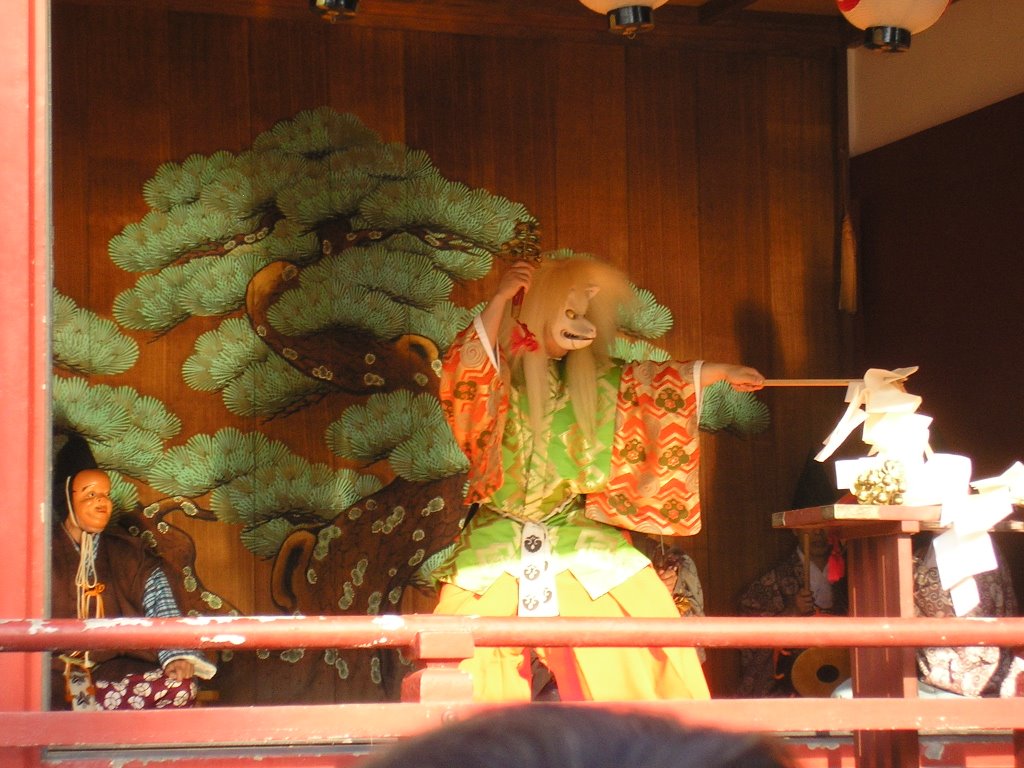
So anyway, this weekend, we've been graced with not one, but three festivals...
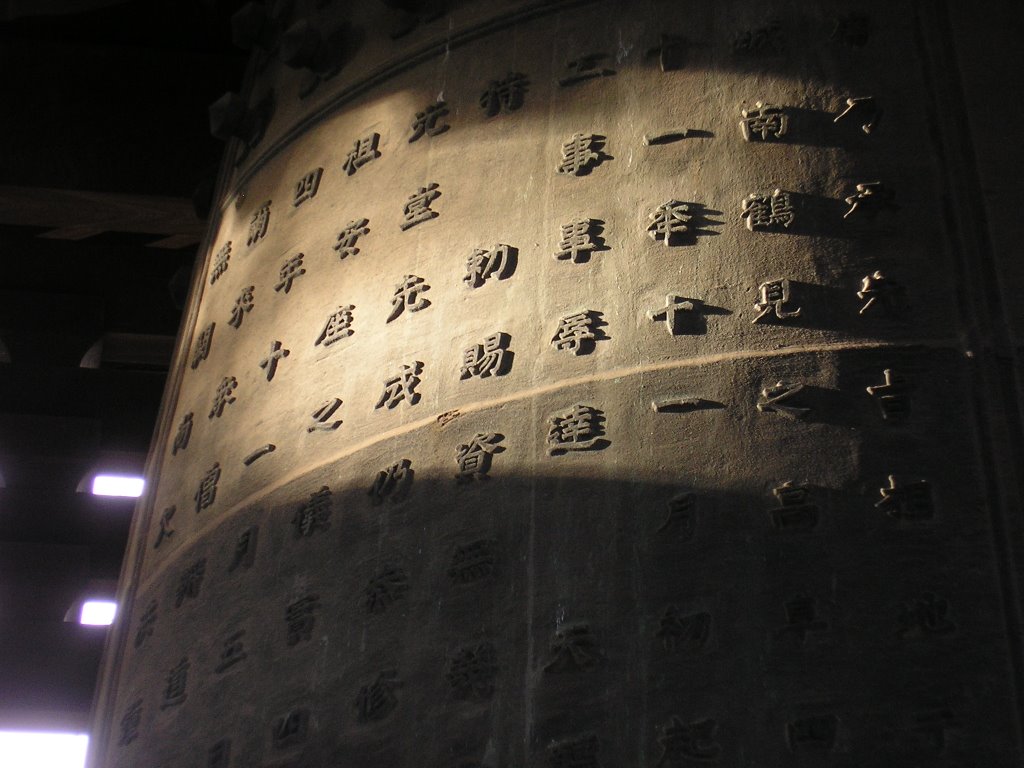
...the Design Festa


Those gentlemen were very heavy indeed.


...Oda Matsuri...


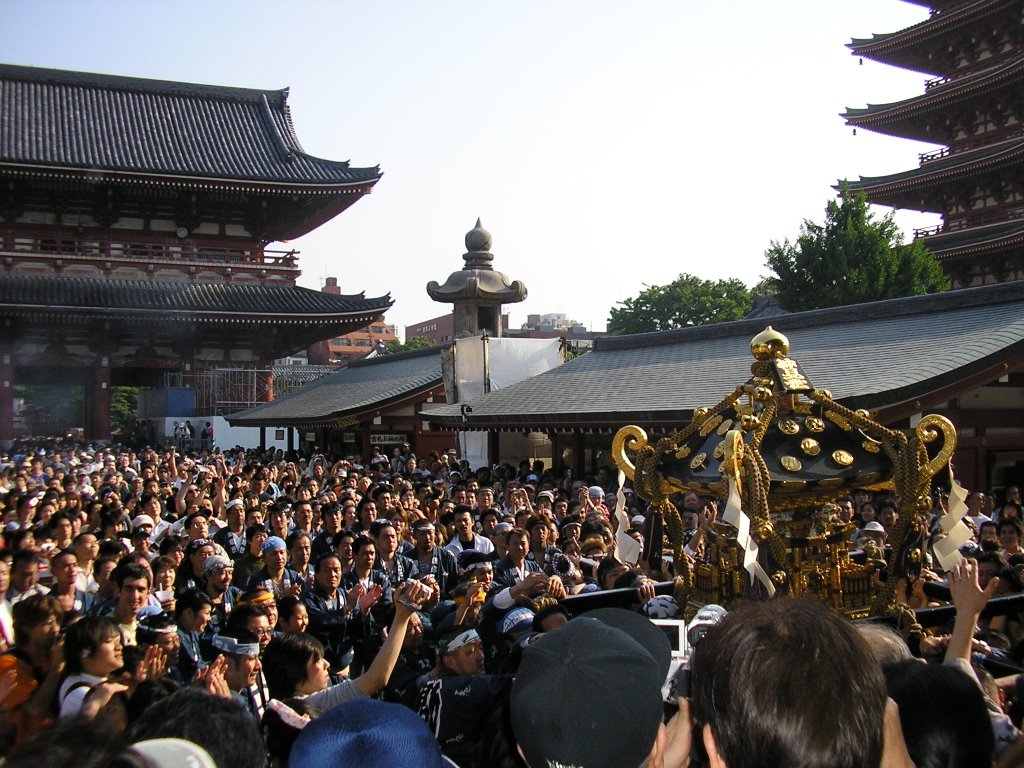
...and the legendary Sanja Matsuri...


...and I still have no idea what it's about.

Labels: , , , , , , ,

Monday, May 08, 2006

How Golden was my Week?

Pretty damn, thank you very much. My five day weekend started with a special enkai, one where new teachers are welcomed, and those that depart are given a hearty sayonara...with lots of alcohol.

Definitely my most regimented enkai, divided into sections to accommodate speeches and socialising. The latter had me remembering that Japan is a very conservative country, and that my tongue, once lubricated with beer, is capable of slobbering over some very sensitive issues, not least of all, the fictional character Yasunori Kato (from the epic Teito Monogatari, adapted into the manga Doomed Megalopolis), a powerful wizard intent on destroying Tokyo. The notion that a Japanese might want to raze the capital puzzled, and might even have offended those encountering my enthusiasm for the first time. Thankfully, the atmosphere was saved by the scheduled rendition of the school anthem (all three verses). The stage was then set for a rapid descent into karaoke.

My attempt to sing a song in Japanese was described as "funny". However, the new Kyoto sensei, looking like he had just stepped out of the shower into his suit & singing "Born to be Wild" in the manner you imagine every drunken Japanese man at karaoke, was equally hilarious to me and worthy of a hearty guffaw. That was a pleasure I saved until later, as my rank at school is roughly equal to that of the stationary cupboard.

Only Hayley can testify as to my state when I got home. Needless to say, I was useless the next day.


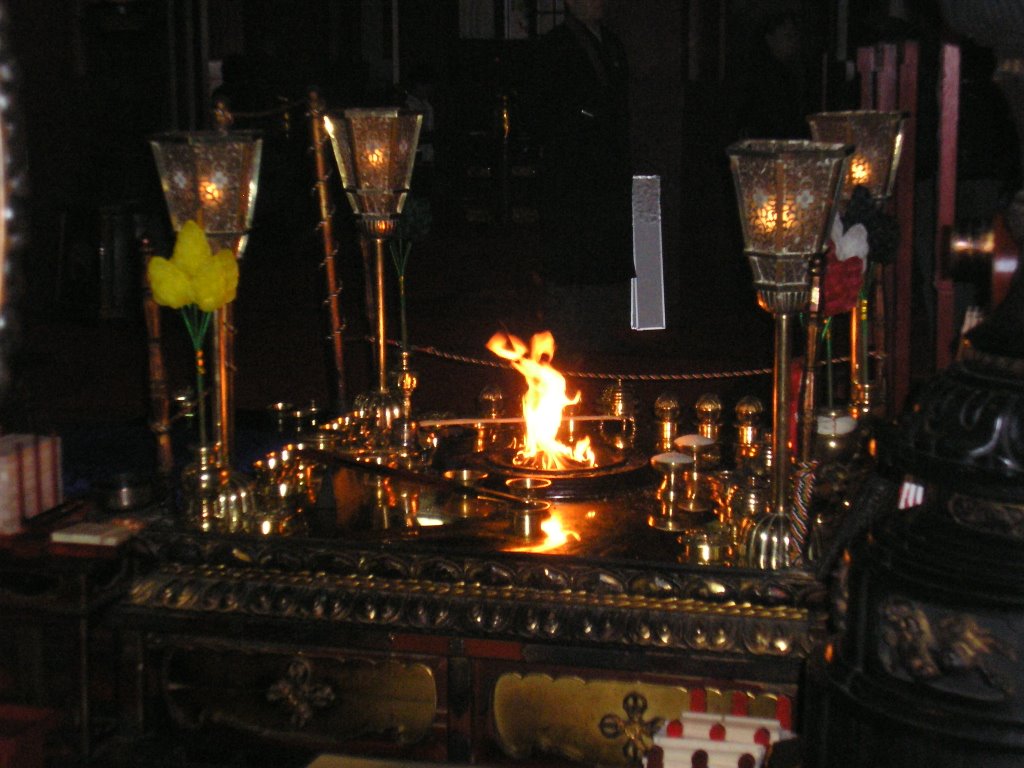
Once I'd recovered, we took full advantage of the holiday by venturing out to Daiyuzan in Minami-ashigara, where life moves at a somewhat gentler pace. The plan was to see Daiyuzan Saijoji, third highest ranking Temple of the Soto Buddhist sect. This idea was crushed by the colossal distance we had to walk, and the irregularity of mountain buses. We did however, manage to take in the Sunset Waterfall, where the legendary Kintaro bathed as a child.


As fortune would have it, we arrived the day before Boys Day, the last holiday of Golden Week, when parents erect samurai dolls and fly carp streamers to pray for the future success of their sons. The tale of the wild boy, Kintaro, appointed by the ancestor of the first shogun, Yorimitsu Minamoto because of his absurd strength, is quite resonant at this time of year, especially in the mountains where he wrestled bears. Koi were out in force.


...and that's not all...not by a long shot...Hayley and I went to Nikko last weekend. That's an entry in of itself, and there will be pictures...
Labels: , , , , , ,

Monday, April 24, 2006

Shinto 3

So...the post WWII abolition of State Shinto & the Meiji declaration of freedom of religious belief has left Japanese spirituality with a colouful, if slightly vague, countenance.

Modern groups like Oomoto (with members such as Yamatsuka Eye of the Boredoms and founder of the martial art Aikido, Morihei Ueshiba) see the Divine in some very interesting places. They recognise not only notable figures from other religions as Kami, but also the creator of Esperanto, Ludwik Zamenhof. Esperanto being an attempt at a universal language, this suits the doctrine that the second leader, Onisaburo Deguchi, was a Messiah who would unite the world. Art is considered important to members, who believe that it brings humans closer to the Divine, and in a marked contrast to patriarchal Japan, Oomotos' spiritual leaders have always been women.

The group Soka Gakkai (influenced by the hardline Nichiren Buddhist sect) is Japans most powerful Buddhist sect. Accusations of intimidation and political corruption led to a reform in the laws regarding religious belief, eventually granting the Government greater powers of scrutiny in 1996. This move was fuelled mostly by the notorious Aum Shinrikyo cult, responsible for a variety of terrorist acts in Japan, culminating in the 1995 sarin gas attack on the Tokyo Metro. Since the arrest of their leader, the group has taken a more moderate approach.


Generally speaking though, many Japanese seem to regard religion as some sort of hat; borrowing traditions out of fancy. Pictured is Andy "I weren't doin' 'owt" Murray who, with his formidable Japanese skills, has a sideline as a fake priest, for those Japanese couples who want a Western style Wedding.


The truly wonderful thing about Japanese religion is that it's flexible and changes to fit modern life. One example is this rather incongruous looking building in the grounds of Kawasaki Daishi. It's a shrine dedicated to road safety, complete with a large car park in front of it, so the priests can bless vehicles en masse...naturally conjuring up images of men of the cloth standing at traffic lights with a bucket of holy water & a rag, frantically blessing windscreens & requesting donations from disgruntled drivers. Charms for road safety can also be bought at most Temples.

Shinto grows heads like a Hydra and gives birth to Gods with vigorous fertility. I read a story about a man in Higashiosaka who ran a shop selling herbal ear remedies next to a vacant lot that passing men would urinate into. He wasn't keen on that, so he erected two rocks and a shimenawa, to convince people that it was a sacred site, and ensure they wouldn't piss on it. After a while, people began leaving donations and asking him which particular Kami was enshrined. Fishing for an answer, he replied "the Kami of curing ear problems", and thus a new God was born. Over the years, the site, on a street leading to the Ishikiri Shrine, has become a small shrine in its own right.

Maybe in the 21st century, Shinto, or Japanese religion, has again come to resemble what it was before the arrival of other cultures; a folk religion, invoked when it's wanted, its lifeblood the cycle of festivals and observances that mark changing of seasons, coming of age ceremonies, and rituals to ensure good fortune.

Not really much more I can say about it except for this. Those of you who know me well will be aware of how much faith I put in statistics, but this one's a corker. Annually, the Agency for Cultural Affairs takes a census of religious groups and the members they have. Every year, the sum total of adherents claiming affiliation to a religion exceeds that of the national population.

So Japan...temples...Kami...Buddhas...what it's all really about is karaoke and beer - hurrah!


Yes indeedy, this past week we've been graced with the prescence of the lovely Rosie, giving us the chance to catch up, show her our favourite bits and me to take even more photos of Sensoji.


Thanks for coming over Rosie - it was great to see you...and as for the rest of you...we have a big flat by Japanese standards.

Labels: , , , , , , ,

Saturday, April 15, 2006

Shinto 2 - Born Shinto, die Buddhist

Japanese religion beautifully demonstrates their assimilative tendencies. I think I can safely say that the only genuinely Japanese phenomena I've encountered, are personality, rice and the ability to draw upon influences from the rest of the world and adapt them to suit the populace.

Shinto was only defined as a religion in order to distinguish itself from Buddhism... and to further muddy the waters, since Japans first encounter with writing was brought over from China by Buddhist missionaries, terms and concepts were taken from that religion and Confucianism, in order to express Shinto as a system of thought, but also to encourage a sense of national identity when dealing with foreign powers.
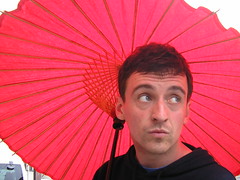
Buddhism and Shinto fused - sometimes, the Buddha is seen as a Kami, and by contrast, Buddha-hood can be seen as the state that all creatures, including Kami, aspire to. However, part of this assimilation resulted in Japanese Buddhism becoming very different from that which first arrived. Rather than contributing to Buddhist thought, it was adopted as a tool for Japanese society.

Generally speaking, the other-worldly-ness of Buddhism was at odds with the "here and now" of Shinto, since the latter traditionally didn't hold the belief of an afterlife. In order to catch on, Buddhism had to adapt to the ideals already in place. It had to change from being a world-denying to a world-affirming religion. Buddhism in Japan, with the idea of reincarnation, became death oriented, and probably struck a chord with ancestor worship. Funerals in Japan are traditionally Buddhist affairs, hence the title of this entry.

During the military dictatorship of the Tokugawa Shogunate (1603-1867), Buddhism was adopted as the state religion and used as a form of social control. A law required all families to register at a local temple, thus creating a network of government instituted parish organisations. Also, reforms in Japanese Buddhism couldn't exist as independent sects without prior permission from the state. This role made Buddhism quite unpopular during the Meiji resoration (1868-1912) when Shinto was declared as the state religion.

By contrast, Confucianism, also considered important by the Tokugawa, did a much better job of suiting the Shinto outlook, eventually influencing the Hagakure, the fabled code of the Samurai. Confucianism is an elitist philosophy, the governing body exercising a "Mandate of "Heaven", essentially a right to rule through Divine Providence. A key difference between Chinese and Japanese Confucianism is that this mandate can be "revoked" in the former (through political revolution or natural disaster, the fall of a monarch indicating that they were deemed unfit to rule), whereas the Japanese Emperors are the oldest unbroken monarchist line in history, despite their power being nothing more than symbolic in some periods. Notions of loyalty and political as well as personal obligation were particularly resonant, and continue to be so in contemporary Japan.

And that's not even mentioning Christianity, introduced by the Dutch & Portuguese. In keeping with its traditions as a religion of the persecuted, it hasn't exactly enjoyed a secure footing in Japan. This is probably because a great many Christian edicts fly in the face of Shinto, monotheism being a huge example. Not only does it dismiss the relevance of the thousands of Kami, but it removes the Emperors divine status. Christianity also places a strong divide between the mundane and divine, which with Shinto, exist in continuity with each other. On top of all this, Christianity seeks to change the social order by bringing about the kingdom of God, but perhaps most importantly, the positive, optimistic, life-affirming attitude of Shinto is dichotomous to the view of mankind born into sin.

With all this to contend with, it's a wonder that Christianity even scratched the surface of Japanese spirituality, but it does have a following here. During times of political strife, such as the Civil War (1482-1558), the Meiji period (1868-1912) and the post-WWII occupation (1945-1952), it's alien nature was seen as a great asset to people believing they needed a new outlook. That aside, the ideal of self sacrifice for the greater good is so Japanese you can taste it. Also, as some people in the West are fascinated by Oriental culture, the inverse is true in the East. Christianity has an appeal because of its associations with Europe, America, the West and modernity. There are also ethical reasons for converting - people who believe that these ideals create a person best suited to serve the nation, morally or, when dealing with other Christian nations, politically.

Every new arrival on the Japanese spiritual scene has had to appeal to the people themselves, thus making the Japanese religious outlook a hotchpotch of symbolism from several religions, and as if it couldn't get any more complicated, part of the Meiji restoration declared absolute freedom of religious belief...but I'm saving all that for the next entry...

Labels: , , ,

Sunday, April 09, 2006

Shinto

You would not believe the number of times I've tried to write this entry...Shinto (the way of the Gods) is a polymorphous, multi-headed beastie, and concisely defining it is a task Herculean in stature.


An indigenous form of Animism, it centres around the worship of the natural world and its elements, particularly those that inspire awe, such as mountains, waterfalls, dense forests, cloud formations, fire and even other human beings. These inspiring phenomena have associated, or are themselves "Kami"; divine beings.

Shinto isn't the sort of religion one can just convert to willy-nilly, not least of all because it has been known to emphasise the divinity of the Japanese people (surely, if not the root, then at least the soil of their cultural pathology), but also because it isn't really organised in such a way. It sometimes seems inappropriate to even describe Shinto as a religion. It's more of an attitude, an outlook, a way of seeing the world and behaving. An optimistic, positive view of an unspoken status quo that simply is. Shinto has no creed, no sacred texts, no attempts to win converts. Its life blood is a cycle of observances with an absurd amount of Gods. Although all the Japanese I've spoken to about Shinto wouldn't describe themselves as religious, they still take part in the array of festivals and ceremonies that are steeped in magical-religious ritual. This may also have something to do with the unquenchable group ethic.

The phrase "kuroshi toki no kamitanomi" (in times of trouble, turn to the Gods) sums up the Japanese attitude towards Kami worship. There are thousands of Kami, each one representing a different facet of life. If one wants a good yield of rice, then offerings must be made to Inari. Fisherman pray to Ebisu for a successful trip, whilst earthquake Kami must be appeased to avoid destruction of a new building for example. Such practices are still carried out in modern Japan. As late as 1972, many Japanese people relied on an almanac, highlighting days with a proclivity towards bane or blessing, in order to plan activities for the coming year. Organising a wedding for one of the days marked "Butsumetsu" (Buddhas' death) would be disastrous, as would holding a funeral on "Tomobiki" (bring a friend).

In Shinto, or Animism in general, there is a continuity between the mundane and the divine, blurring the edges between the sacred & secular. As you'd expect, the Japanese have a definite hierarchy based on the benefits each Kami brings to man. In Japans' agricultural past, Kitsune, the fox messenger of Inari, was considered particularly important. Kami such as this, along with the more malevolent variety, had to be appeased in order for man to live in harmony with nature, another Shinto ideal. Sin is equated with disease, natural disasters (of which Japan has its share) and other such calamities, created by a failure to appease the deities.

The standard creation myth (from the earliest records of the nation, the Kojiki and Nihongi) has Japan being made by Izanagi no Mikoto (creator or welcoming God) and Izanami no Mikoto (creator or welcoming Goddess). This creation was entrusted to them by the other Heavenly deities.

From the Floating Bridge of Heaven, they dipped the Heavenly Jewelled Spear into the ocean. The brine that dripped from the spears point became the island of Onogorojima (located near one of the two Poles if you want to be specific), where the two were wed. Izanami gave birth to the islands of Japan, along with thirty-five other deities, but in bringing forth the Fire God, she was horrifically burned and died. Some versions of the story have the Gods of metal, earth, water and youthful reproduction being born from her excretia.

In an attempt to rescue his beloved, Izanagi ventures into Yomi no Kuni, the land of the dead. Echoing Orpheus, he looks upon Izanamis' face, despite her pleas for him not to. Greeted with her scorched features, he flees, pursued by the minions of the dead and escapes, blocking the entry to Yomi no Kuni with a huge boulder, thus separating the two lands.

Tainted and defiled by his journey, he bathes, this act eventually taking form in the many Shinto purification rituals. From each drop of cleansing water, a new deity is born - the Gods of the moon, oceans or storms (depending on which version you're reading) and most significantly Amaterasu Omikami, the Goddess of the sun. It is Ninigi, a descendant of Amaterasu, who receives control of Japan. History and myth become one in Ninigis' grandson, Jimmu, the first historical Emperor of Japan.

That's not quite Shinto in a nutshell...although on the whole, it's a fairly shapeless affair, it became the state religion during the Meiji restoration of the late 19th & early 20th century. Also, other religions have put down roots in the Japanese spiritual make-up, the incalculable influence of Buddhism, which gave Japan its first system of writing, being just one example...but this entry's already massive and it doesn't get any simpler...


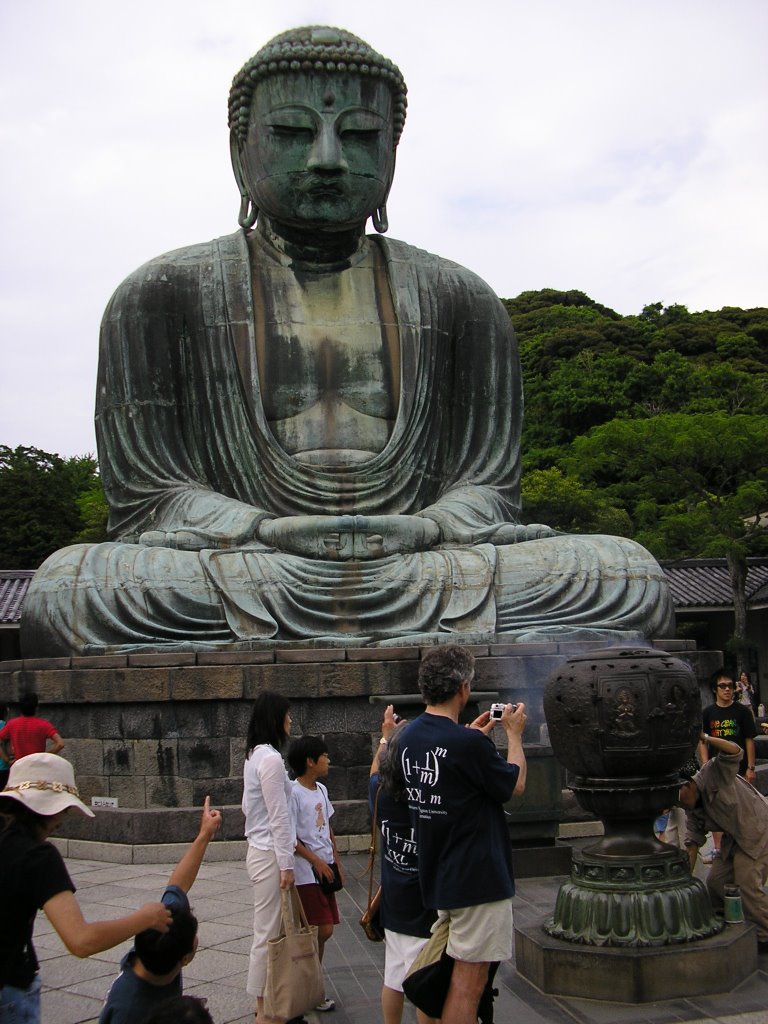
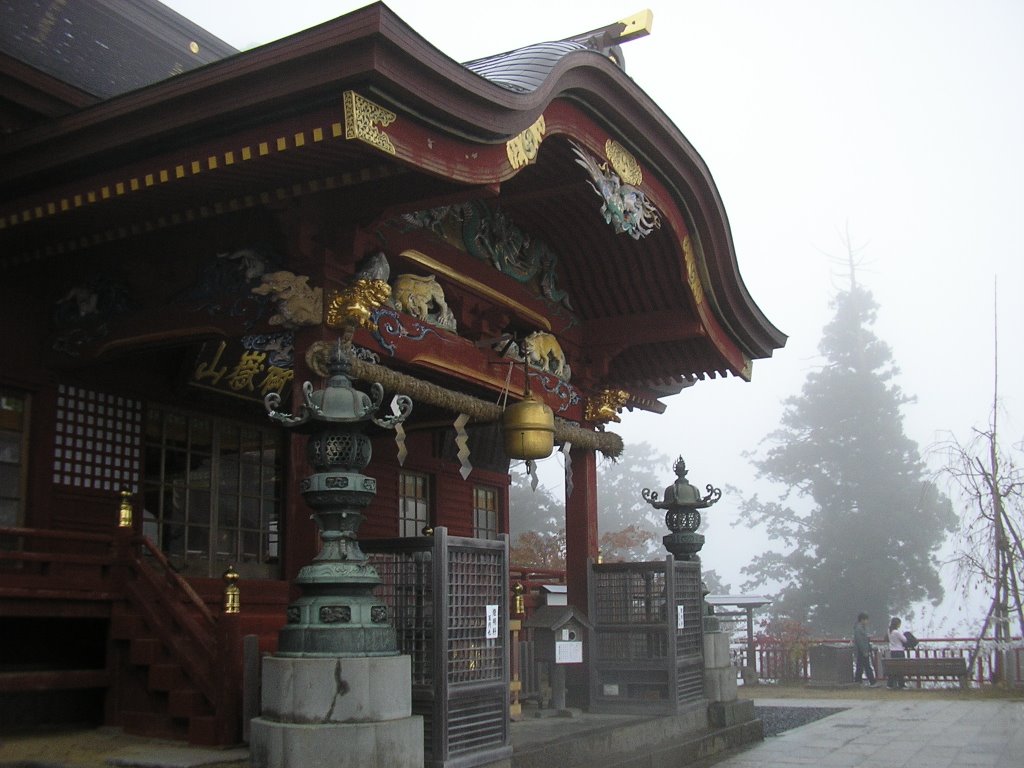
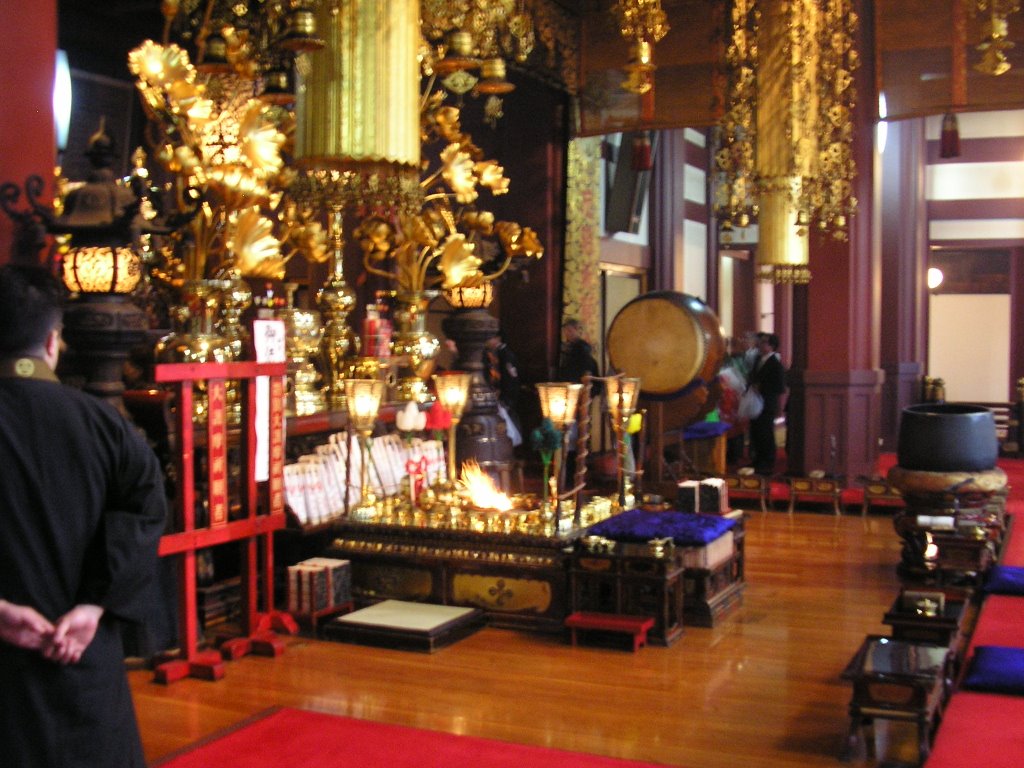
Photos from Mount Mitake, Kawasaki Daishi & Sojiji, Tsurumi

Labels: , , ,